Introduction
For many international buyers, retiring to Mallorca is less about escape and more about building a well-structured next chapter. The appeal is clear, but turning that appeal into a workable long-term living arrangement requires careful decisions around property, residency, taxes, healthcare, and day-to-day practicalities.
Mallorca can offer an excellent retirement lifestyle, but only when the plan behind it is as carefully considered as the purchase itself. The right location, ownership structure, and support setup can make the difference between a smooth transition and a fragmented experience.
That is why a structured approach matters from the start. For buyers who want certainty, discretion, and a home that works immediately and over time, experienced guidance helps reduce risk and protect both lifestyle and capital.
What it’s like living in Mallorca ⇒
The Blueprint for Retiring in Mallorca

To retire in Mallorca, you typically need a lawful right to live in Spain, reliable income or financial means, healthcare coverage, and a property plan that fits long-term living rather than occasional use. For most international buyers, the process is straightforward in principle but detail-sensitive in practice, especially where residency status, documentation, and property selection overlap.
Prerequisites for Relocation
The exact path depends on whether you are an EU/EEA citizen or a non-EU citizen. The table below summarizes the baseline requirements at a practical level.
| Requirement | EU/EEA citizens | Non-EU citizens |
|---|---|---|
| Right to live in Spain | Generally can relocate, subject to registration requirements | Typically need an appropriate visa or residence permit before long-term relocation |
| Proof of funds or income | Usually need to show sufficient financial means when registering residence | Usually need to show sufficient passive income or savings, depending on visa route |
| Healthcare | Public or private coverage may be required depending on status and registration route | Private health insurance is commonly required for residency applications |
| Criminal record documentation | Not typically a standard retirement barrier in the same way as visa-based applications, but documentation rules can still apply | A clean criminal record is commonly required for visa or residency approval |
| Property ownership | Not required to live in Spain, but often part of the relocation plan | Not required for residency by itself, and should not be treated as a substitute for the correct visa route |
Because residency rules and financial thresholds can change, the safest approach is to confirm the current requirements with a qualified immigration or legal advisor before making property commitments.
Quick Steps Overview
- Define your residency route first, based on citizenship, income profile, and how much time you plan to spend in Spain each year.
- Confirm the documentation required, including proof of funds, healthcare coverage, identification, and any residency application paperwork.
- Choose the right area and property for full-time or long-stay living, with attention to access, services, maintenance, and year-round practicality.
- Build your ownership setup early, including legal review, tax guidance, and a realistic plan for ongoing property management.
- Finalize the move only after the residency, healthcare, and property pieces work together as one coherent plan.
For buyers approaching this carefully, the key is not speed but sequence. A structured process reduces avoidable friction and helps ensure that the home, legal position, and lifestyle are aligned from the start.
Step-by-Step: Your Relocation Timeline
A successful move to Mallorca depends on sequence as much as intent. When legal, tax, lifestyle, and property decisions are handled in the right order, it becomes far easier to avoid expensive corrections later and choose a home that supports long-term living.
Residency and Visa Options for Retirees
For most retirees, the right residency route depends first on citizenship and second on how they plan to live in Spain. The non-lucrative visa is commonly the main path for non-EU buyers who do not intend to work, while EU citizens generally follow a registration process rather than a visa application, and the Golden Visa should now be treated with caution, given its phase-out status.
| Pathway | Income Requirements | Work Permissions | Required Time in Spain | Path to Permanent Residency |
|---|---|---|---|---|
| Non-Lucrative Visa (NLV) | Applicants generally need to show sufficient passive income or financial means. Exact thresholds can change and should be verified before applying. | Designed for people who do not intend to work in Spain. | Time-in-country expectations can apply if you are maintaining residence status. The practical requirement depends on how the permit is structured and renewed. | Can form part of a longer-term residency path if renewal requirements are met over time. |
| Golden Visa | Historically linked to qualifying investment rather than a retirement-income model. | Rules have differed from the NLV route, but this pathway is in a phase-out period and should not be relied on without current legal confirmation. | Conditions have varied, and current applicability must be checked carefully. | Any long-term planning based on this route now requires up-to-date legal advice because of its changing status. |
| EU Citizen Registration | EU citizens generally need to show sufficient financial means or another qualifying basis for residence, depending on their circumstances. | EU citizens generally have the right to live and work in Spain, subject to registration and compliance requirements. | Residence is tied more to lawful registration and actual living arrangements than to a visa-style approval process. | Can lead to long-term and permanent residence status if the legal residence conditions are maintained. |
Healthcare and Financial Planning

For retirees, financial planning and healthcare planning should be treated as one decision set, not two separate tasks. The practical questions are straightforward: when you become tax resident, how your assets may be assessed in Spain, what health coverage you need for residency, and whether the island can support long-term medical care with confidence.
Understanding the 183-Day Tax Rule
A widely used threshold in Spain is the 183-day rule. In practical terms, if you spend more than 183 days in Spain during the year, you may be treated as a Spanish tax resident.
That shift can affect how your worldwide income and broader financial position are assessed. Because retirement income, asset structures, and cross-border reporting can become more complex once residency changes, local tax advice should come early, ideally before committing to timelines, ownership structures, or a permanent move.
Navigating the Wealth Tax
Wealth tax is one of the most important planning areas for higher-value international buyers. In the Balearic Islands, the wealth tax burden was reduced from January 1, 2024, and the tax-free allowance was raised to €3 million per person.
That is a meaningful planning consideration, but it should still be reviewed in the context of your total asset position, marital structure, residency status, and where assets are held. The key point is not to assume that buying property and moving later can be handled independently. The tax position should be mapped alongside the acquisition process.
Healthcare Infrastructure
For many non-EU residency routes, comprehensive private health insurance is a core requirement for visa approval. This is not simply an administrative formality. The policy needs to align with the residency route you are applying for, so it is worth confirming the requirements before submitting any application.
From a practical living perspective, Mallorca is well equipped for ongoing care. The island has 15 hospitals and 63 health practices, which gives retirees access to a solid medical network for both routine and more complex needs.
For long-term planning, healthcare is also about continuity, not just emergency access. It is sensible to evaluate proximity to medical services, ease of transport, and the support structure around the home itself, especially if the property is intended to remain suitable over many years.
Where to Retire in Mallorca: Finding Your Area
The best area for retirement depends less on headline appeal and more on how easily daily life works across the full year. For most buyers, the right choice balances atmosphere, access, services, privacy, and how well the location supports long-term living once the novelty has passed.
| Region | Lifestyle Appeal | Property Types | Key Amenities | Winter Vitality |
|---|---|---|---|---|
| Southwest | Resort-style Strong for polished coastal living, marina access, and an established international environment. | High-end apartments, sea-view villas, gated communities, and turnkey homes. | ✓ Particularly strong for golf, tennis, padel, dining, and service infrastructure. | ✓ Generally attractive for year-round living where services and international networks matter. |
| Palma | Urban Historic character, walkability, culture, and day-to-day convenience in one setting. | City apartments, renovated historic homes, and selected larger residences on the edge of the city. | ✓ Strong access to shops, restaurants, healthcare, and professional services. | ✓ One of the most dependable choices for off-season activity and practical daily life. |
| Central Mallorca | Village-led More authentic, slower-paced Mediterranean living with a stronger local feel. | Fincas, village houses, and larger private homes with land. | ✓ Good for space, privacy, and local character, but depends more on exact village and car access. | ✗ Can be excellent for full-time living, but day-to-day convenience varies more by location. |
The “Try Before You Buy” Rental Strategy
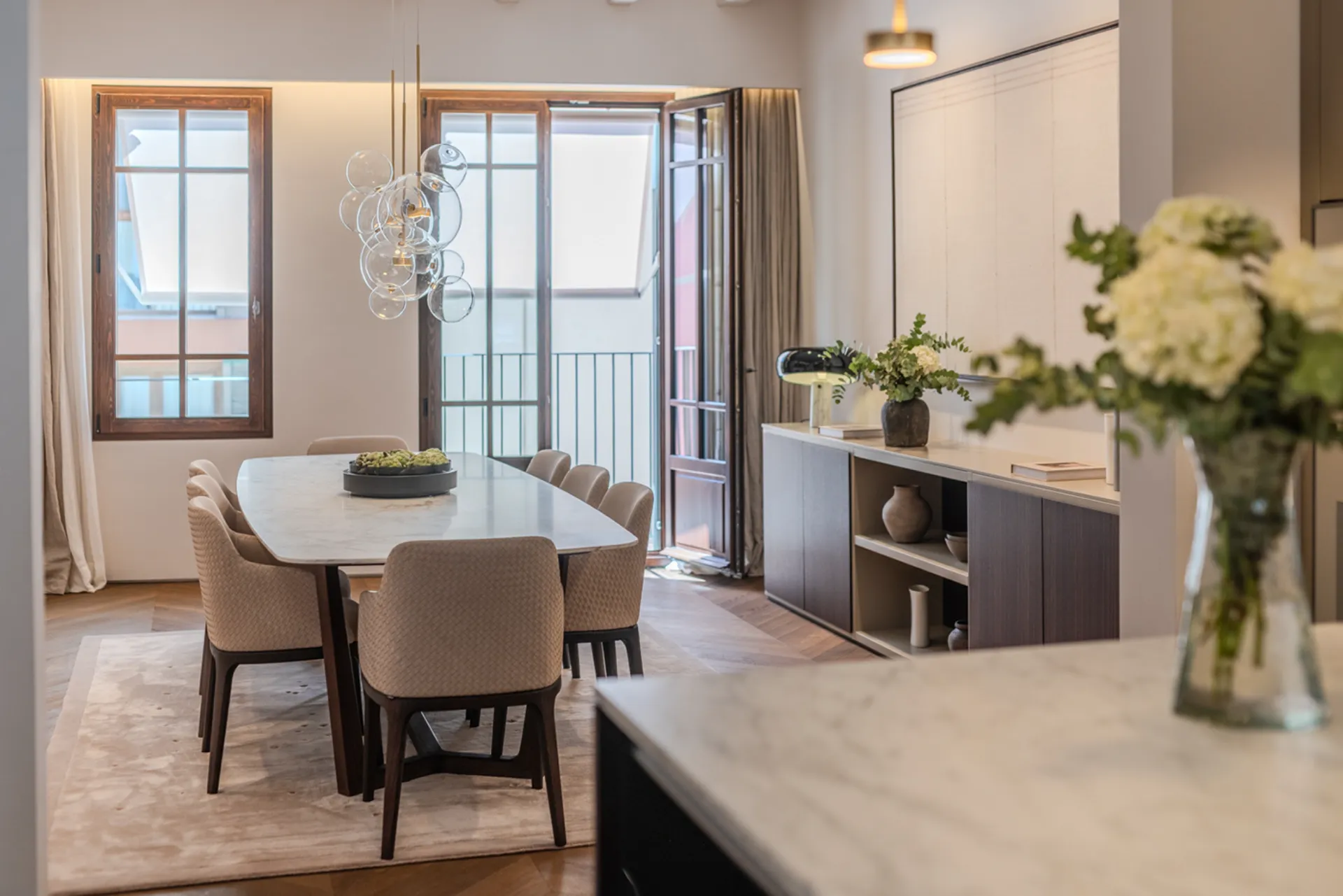
For many retirees, an extended rental is one of the most useful stages in the relocation process. It creates a lower-risk period to test how Mallorca works in real life before committing to a purchase that may sit in the €1M+ range.
A trial phase helps separate short-stay impressions from long-term suitability. An area that feels ideal for a holiday may function very differently once you are dealing with grocery access, appointments, parking, travel to Palma or the airport, and the general rhythm of everyday life.
In practice, renting first gives you a way to assess three things at once: the location, the property type, and your own routines. You can see whether you prefer walkability or privacy, village life or city access, a lock-up-and-leave apartment or a larger house that requires more oversight.
A useful trial rental should be evaluated with practical criteria, not just aesthetics. Focus on questions such as:
- Daily convenience: How easy is it to reach shops, healthcare, restaurants, and essential services without friction?
- Mobility: How comfortable are the local roads, parking conditions, and typical travel times for the way you plan to live?
- Year-round comfort: Does the property have the basics needed for a longer stay, such as fast internet, air conditioning, and outdoor space that is genuinely usable?
- Neighborhood fit: Does the area match your preference for activity, privacy, and community involvement outside peak season?
This stage is also useful for testing your assumptions about what matters most. Some buyers discover they want stronger service infrastructure and easier access to Palma. Others realize that space, quiet, and a more local setting matter more than convenience. It is far better to learn that in a rental than after completion.
An increasing share of longer-term rental demand is tied to this kind of trial-phase relocation. That reflects a sensible shift in buyer behavior: using a temporary base to validate the lifestyle before making a permanent decision.
For buyers who want certainty rather than speed, renting first is not a delay. It is part of due diligence.
Buying Your Home and Avoiding Post-Purchase Friction

Buying property in Mallorca is only part of the task. For international retirees, the larger challenge is often making sure the property functions properly after completion, from legal compliance and renovation oversight to maintenance, staffing, and seasonal management.
High-end purchases can become unnecessarily complicated when too many separate providers are involved without clear accountability. A buyer may have one contact for the property search, another for legal work, another for design, and another for maintenance, with no single person responsible for how those parts fit together. That is where delays, miscommunication, and avoidable cost tend to appear.
Why an Integrated Partner Matters
Fragmented advice creates risk because each provider sees only part of the picture. A lawyer may focus on legal protection, a contractor on execution, and an agent on the transaction itself, but retirement buyers usually need all of those decisions to align with a long-term ownership plan.
An integrated partner brings structure to that process. The advantage is not simply convenience. It is continuity, with acquisition, renovation, furnishing, and operational planning treated as one connected project rather than a series of handovers.
This is especially relevant when the property will need adaptation before full-time use. Layout changes, technical upgrades, furnishing decisions, and service arrangements all affect how quickly the home becomes practical, comfortable, and easy to manage. Without coordination, even a strong purchase can lead to a frustrating first year of ownership.
For many international buyers, working with an experienced local advisor matters more than expected. It helps create a more serious process from the start, reduces legal and technical blind spots, and gives the buyer a clearer line of responsibility throughout the transaction.
Managing the Property from Abroad
Even when retirement in Mallorca is the long-term plan, many owners still spend part of the year elsewhere. That makes post-purchase management a central consideration, not an afterthought.
A well-run property needs ongoing oversight. In practice, that can include preventive maintenance, keyholding, supplier coordination, utility management, security checks, housekeeping, and response to unexpected issues when the owner is away.
The risk is not only inconvenience. Poor management can affect the condition of the asset, the reliability of contractors, and the overall quality of life once the owner arrives. What looks manageable on paper often becomes fragmented quickly when there is no single system behind it.
This is where a holistic model becomes useful. When the same advisory structure remains involved from acquisition into ownership, there is less operational drift and fewer gaps between what was promised, what was delivered, and what is maintained over time. For buyers who value certainty and low-friction ownership, that continuity is often as important as the purchase itself.
Integrating into the Island Lifestyle
A successful retirement in Mallorca depends on more than residency, property, and climate. Long-term satisfaction usually comes from building a life that has structure, familiarity, and genuine local connection, rather than staying inside a narrow international circle.
The most reliable starting point is routine. Regular visits to the same café, bakery, market, fitness club, or walking route create recognition and repetition, which is how daily life begins to feel settled. This also gives you a more realistic relationship with your area than relying only on social events or seasonal activity.
Language matters as well. You do not need fluency immediately, but investing time in Spanish is one of the clearest signals that you intend to participate rather than remain separate. It tends to improve everyday interactions, make service relationships smoother, and reduce the sense of distance that can otherwise develop over time.
Sports and activity-based communities are often one of the easiest ways to build a network. Mallorca has strong infrastructure for golf, padel, tennis, and other regular activities, which can create a more natural social rhythm than formal networking or purely expatriate gatherings.
A practical approach is to focus on a few repeatable habits:
- Build local routines: Use places and services that residents use regularly, not only internationally oriented venues.
- Study Spanish consistently: Even modest progress helps with appointments, neighbors, and day-to-day interactions.
- Join a club or activity: Golf, tennis, and padel can create recurring contact and shared context.
- Create purpose after the move: Retirement is often easier when the week still has shape, responsibility, and social contribution.
That last point is often underestimated. Many people plan the move carefully but give less thought to what will replace the pace and structure of working life. A fulfilling transition usually includes some form of ongoing purpose, whether that is mentoring, volunteering, family involvement, or a meaningful personal project.
The goal is not to become fully local overnight. It is to create a life on the island that feels participatory, steady, and sustainable.
Conclusion & Next Steps
Retiring in Mallorca can work exceptionally well when the move is approached as a long-term plan rather than a simple property search. Residency, tax position, healthcare, area choice, acquisition, and post-purchase management all need to support one another if the result is to feel stable, practical, and genuinely enjoyable.
That is why structure matters. A measured process reduces avoidable risk, protects capital, and makes it far easier to choose a home that works not only on arrival, but for the years that follow.
If you are considering a move and want a clearer view of the right areas, the likely process, or the ownership implications, Reiderstad Invest can support an initial advisory conversation. For buyers who prefer to evaluate the island in a more practical way, a curated area tour can also be a useful next step.
See what it’s like living in Mallorca like a local ⇒
Frequently Asked Questions
Is it expensive to retire in Mallorca?
It can be, especially if you are buying in premium areas and want a property that is ready for immediate long-term use. Costs vary widely depending on location, property type, tax position, healthcare setup, and how much support you want after purchase.
The more useful question is whether the full ownership model is financially coherent. For most international buyers, that means looking beyond the purchase price and planning for residency, tax, insurance, maintenance, and ongoing property management.
Do I need to speak Spanish to retire in Mallorca?
No, but learning Spanish will make everyday life noticeably easier. It helps with local administration, service providers, neighbors, and building a life that feels more integrated and less dependent on an international bubble.
You do not need fluency from the start. Even a basic working level can improve day-to-day interactions and make the transition into full-time living smoother.
Can I bring my car when moving to Spain?
Yes, in principle, you can bring your car when moving to Spain, but the process depends on where the vehicle is registered and your residency status. Import, registration, tax, and compliance requirements can apply, so it is important to confirm the current rules before making the move.
For many retirees, it is worth assessing whether keeping, importing, or replacing the car is the most practical option. That decision often depends on how much driving you expect to do, where you will live, and how suitable local roads and parking are for everyday use.