
Introduction
This guide to Mallorca Property Prices by Area is designed for international buyers who want a clear view of how location influences value, liquidity, and day-to-day usability. Rather than treating Mallorca as a single market, we look at the island through the lens that matters in practice: distinct regions, micro-locations, and the type of property stock available in each.
After the post-pandemic boom, the Mallorca market has largely transitioned into a more stable, sustainable phase. For buyers focused on capital preservation and long-term lifestyle planning, this calmer environment tends to support better decisions, cleaner due diligence, and fewer compromises driven by urgency.
The sections ahead translate pricing into a practical context: what typically drives premiums, where scarcity is structural, and how to align area selection with your ownership plan (full-time living, second home use, or investment). Reiderstad Invest approaches the market in the same structured way, supporting clients from acquisition through design, execution, and long-term ownership.
Explore our Mallorca property forecast ⇒
Mallorca Property Prices by Area (Quick Summary)
Prices vary significantly by region, micro-location, and property type, especially once you focus on the premium market (renovated homes, sea views, and prime village or coastal positions). The table below gives a scannable baseline using 2024 asking-price ranges, which is typically the most practical starting point for comparing areas before you evaluate a specific street and property condition.
| Region | Avg. house price (€) | Avg. apartment price (€) | Lifestyle appeal |
|---|---|---|---|
| Palma / Son Vida | Palma: €2.0M–€2.8M+ (prime) Son Vida: €2.6M–€4.0M+ (prime)Top homes €5.5M–€7.5M+ |
Palma: €750k–€900k+ (prime) Son Vida: €600k–€1.5M+ (prime)Top up to €2.3M |
Year-round city living, Culture + dining, Golf estates, Schools access
|
| Southwest Andratx, Santa Ponsa, Portals |
€2.0M–€4.5M+ (prime)Top homes €4.5M+ | €750k–€1.1M+ (prime)Top €1.1M+ |
International schools, Marinas, Golf and sports clubs, Easy Palma access
|
| West Sóller, Deià, Valldemossa |
€1.36M+ in good locationsTop homes €3.2M+ | €350k–€575k+Top around €650k |
UNESCO-protected landscape, Heritage villages, High scarcity
|
| North Pollensa, Alcudia |
€2.3M–€4.7M (prime)Top homes €10M+ | €375k–€485k (prime)Top €550k+ |
Outdoor lifestyle, Beaches + mountains, Family-friendly pace
|
| Central Santa Maria, Alaró, Binissalem |
€2.5M–€4.5M (prime)Top homes €4.5M+ | €300k–€400k+Top €400k+ |
Country fincas, Village life, Quick Palma access
|
| Southeast Santanyí, Portocolom, Cala Llombards |
€1.55M–€1.9M (very good)Top homes €2.2M+ | €400k–€500k (very good)Top €450k+ |
Coastal coves, Village authenticity, Marinas nearby
|
Market Trends: Are Mallorca Property Prices Falling?
In the premium segment, the main adjustment has been in transaction tempo, not in a broad price reset. If you are searching for Mallorca property prices falling, the more accurate interpretation is a soft landing: volumes have normalized from boom-era highs, while prices remain supported by scarce prime supply and sustained international demand.
+15% YoY
Average price per m² (Balearics, 2024)
Notaries reported the strongest annual price growth in a decade, following a stable 2023.
+50% (5 years)
Cumulative rise in average €/m² (Balearics)
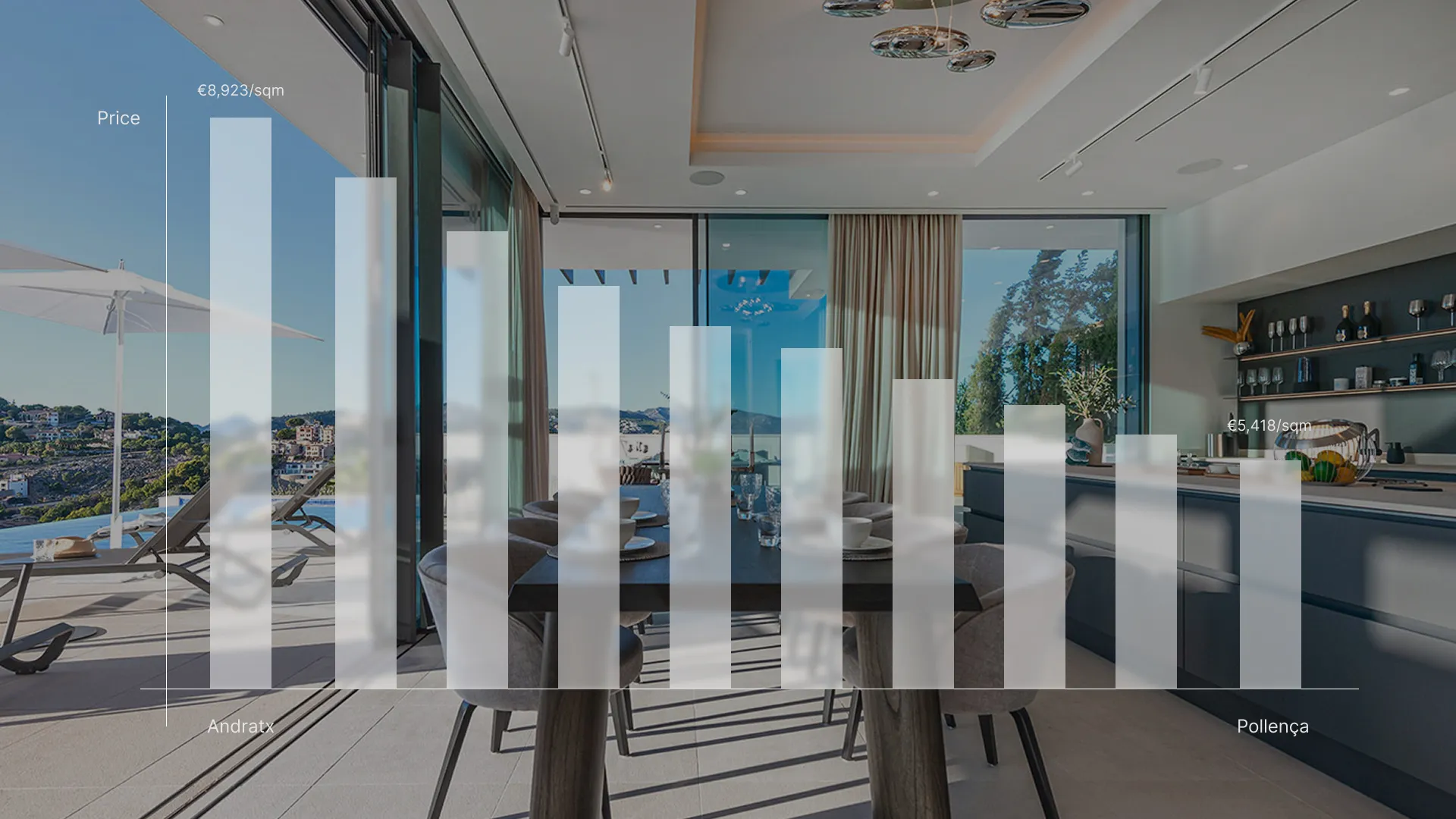
Useful context for a Mallorca property prices graph: longer-term gains can stay intact even if annual growth rates vary.
10,120 sales
Mallorca residential sales (2024)
IBESTAT recorded a 4% YoY decline, consistent with normalization toward historic averages.
33%
Foreign buyer share (Balearics, 2024)
Land Registrars data shows foreign participation edging up slightly, supporting demand in prime areas.
The 2025–2026 Property Outlook
The most reliable way to think about Mallorca property prices in 2026 is continued stability, with performance led by quality and location. Buyers have become more selective, but the premium segment remains supported by constrained supply and a large pool of international second-home demand.
What can still shift, even in a stable market:
- Transaction volumes can move quickly with macro sentiment: when uncertainty spikes, buyers pause, and liquidity tightens before pricing necessarily adjusts. Planning for timing flexibility is often more effective than trying to time a single entry point.
- Travel friction can affect short-term rental seasonality: evolving border and travel-authorization processes can shift arrival patterns and booking behavior. This matters most if your underwriting depends on peak-week occupancy rather than longer-term use.
For Reiderstad Invest’s typical client, this environment tends to reduce risk: there is more room for careful due diligence, and less reliance on momentum-driven appreciation.
Understanding the Price Graph
A Mallorcan property prices graph can look confusing because it blends multiple segments (apartments, fincas, new-builds, prime sea-view homes) and mixes both local and international buyer behavior. Two principles keep interpretation grounded.
First, focus on multi-year direction: Notaries data points to a 50% cumulative rise over five years in the Balearics, with +15% year-on-year growth in 2024.
Second, separate volume from price: Mallorca recorded 10,120 residential sales in 2024 (IBESTAT), down 4% year-on-year, yet overall pricing remained supported. In premium locations, this is a common pattern: fewer transactions, but continued competition for the best assets, which helps preserve price levels.
Palma & The Southwest: Urban Premium and Exclusive Coasts
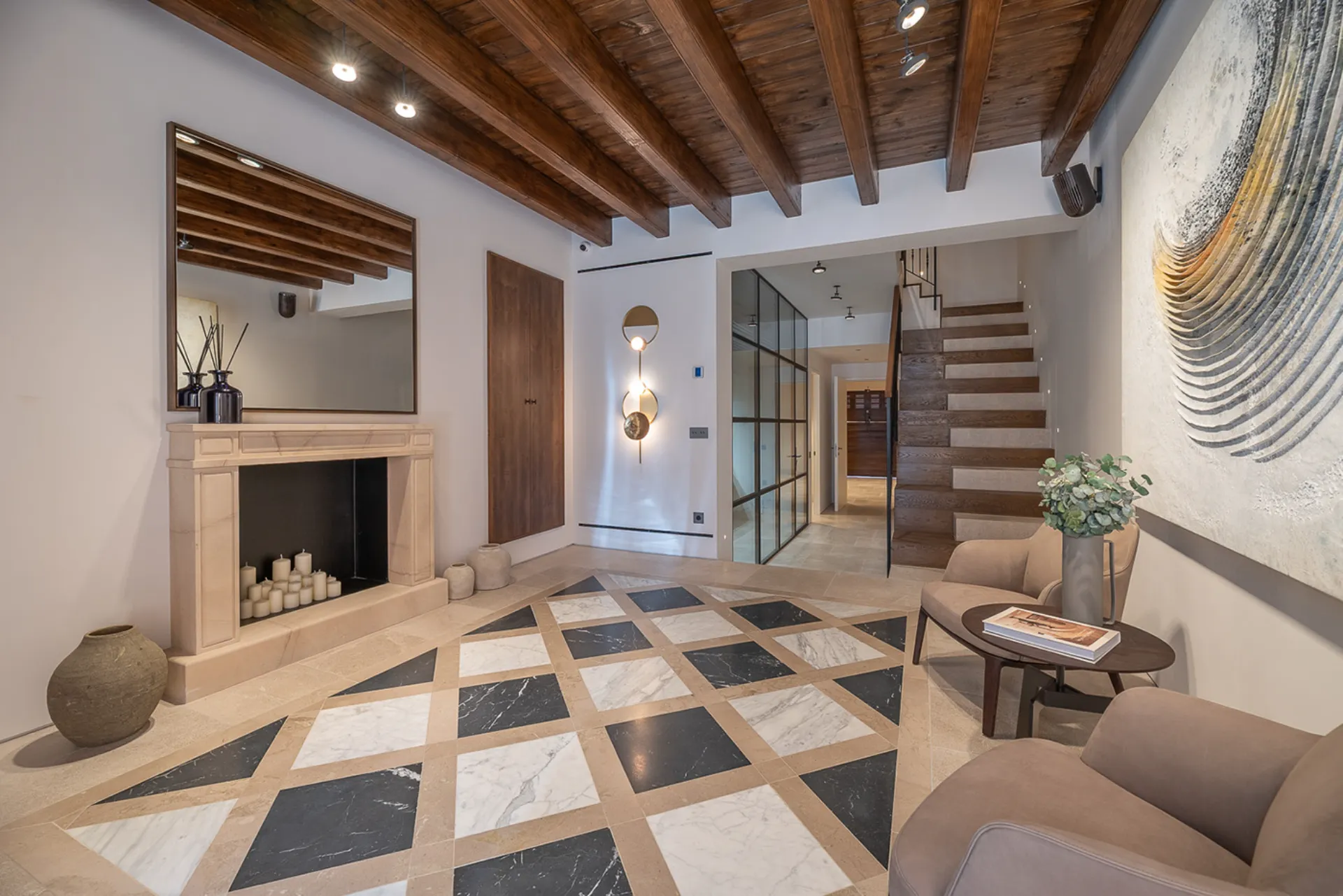
Palma and the Southwest typically sit at the top of the island’s premium market because they combine scarcity with day-to-day usability. For international buyers, these are the areas where lifestyle infrastructure is immediate, liquidity is usually stronger, and the market tends to differentiate clearly between prime assets and everything else.
Palma de Mallorca & Son Vida
Palma is Mallorca’s year-round capital market. Demand centers on renovated historic homes, design-led apartments, and locations that offer walkability and proximity to water. In practical terms, the biggest price drivers are quality of refurbishment, building character, and outlook (especially sea views).
Key Palma drivers:
- Historic renovations: well-executed refurbishments in established neighborhoods command a premium because comparable supply is limited and outcomes are hard to replicate.
- Sea views and waterfront proximity: floor height, orientation, and protected sightlines can outweigh pure size.
- Long-term city upgrades: infrastructure investment like the Paseo Marítimo redevelopment and the revitalization of Club de Mar supports Palma’s position as a durable lifestyle base.
Engel & Völkers’ 2024 asking-price ranges provide a useful reference point for the upper market:
- Palma houses (2024): very good locations typically €2.5M to €2.8M, with top locations over €5.5M.
- Palma apartments (2024): very good locations typically €750k to €900k, with top locations over €1.1M.
Son Vida, by contrast, is Mallorca’s established golf-estate address. It attracts buyers prioritizing privacy, prestige, and larger homes with outdoor space, while keeping Palma within easy reach. The area’s three golf courses, gated-feel environment, and proximity to international schools make it a consistent choice for families who want a long-term base.
Engel & Völkers’ 2024 asking-price ranges underline Son Vida’s premium positioning:
- Son Vida houses (2024): very good locations €2.6M to €4.0M, with top locations over €7.5M.
- Son Vida apartments (2024): very good locations €600k to €1.5M, with top ranges extending up to €2.3M.
Why value retention is often strongest here: both Palma and Son Vida benefit from constrained, non-replicable supply (historic fabric, established neighborhoods, and limited prime land). When market activity cools, demand typically concentrates more, not less, around these fundamentals.
The Southwest (Andratx, Santa Ponsa, Portals)
The Southwest is one of the island’s most internationally oriented regions, and it remains a core hub for €1M+ buyers who want the highest convenience-to-lifestyle ratio. The area’s long-standing appeal is built on school access, high-quality sports infrastructure, and marina-led coastal living.
The features that consistently support demand:
- International schools concentration: reduces friction for family relocation and supports year-round living patterns.
- Luxury marinas and coastal hubs: Club de Mar (Palma), Puerto Portals, and Port Adriano reinforce the region’s premium services and long-term desirability.
- Sports and outdoor amenities: golf, tennis, and padel infrastructure is unusually dense for an island market, and it matters for both lifestyle and rental demand.
- Efficient access to Palma: many buyers value being close enough for city culture and healthcare, without committing to an urban home.
Engel & Völkers’ 2024 asking-price ranges show the Southwest’s high price floor and high ceiling:
- Southwest houses (2024): good locations typically €2.0M to €3.0M, very good locations €3.0M to €4.5M, with top locations over €4.5M.
- Southwest apartments (2024): very good locations €750k to €1.1M, with top locations over €1.1M.
A practical investment note: as many Spanish destinations apply tighter enforcement around short-term rental compliance and tourist behavior, Palma and the Southwest often benefit in livability, but rental strategies may need to be more conservative and professionally managed. For long-term owners focused on certainty, that type of normalization can be supportive, not negative, because it helps protect neighborhood quality, which is one of the foundations of these areas’ pricing power.
The West & North: Protected Heritage and Outdoor Lifestyle
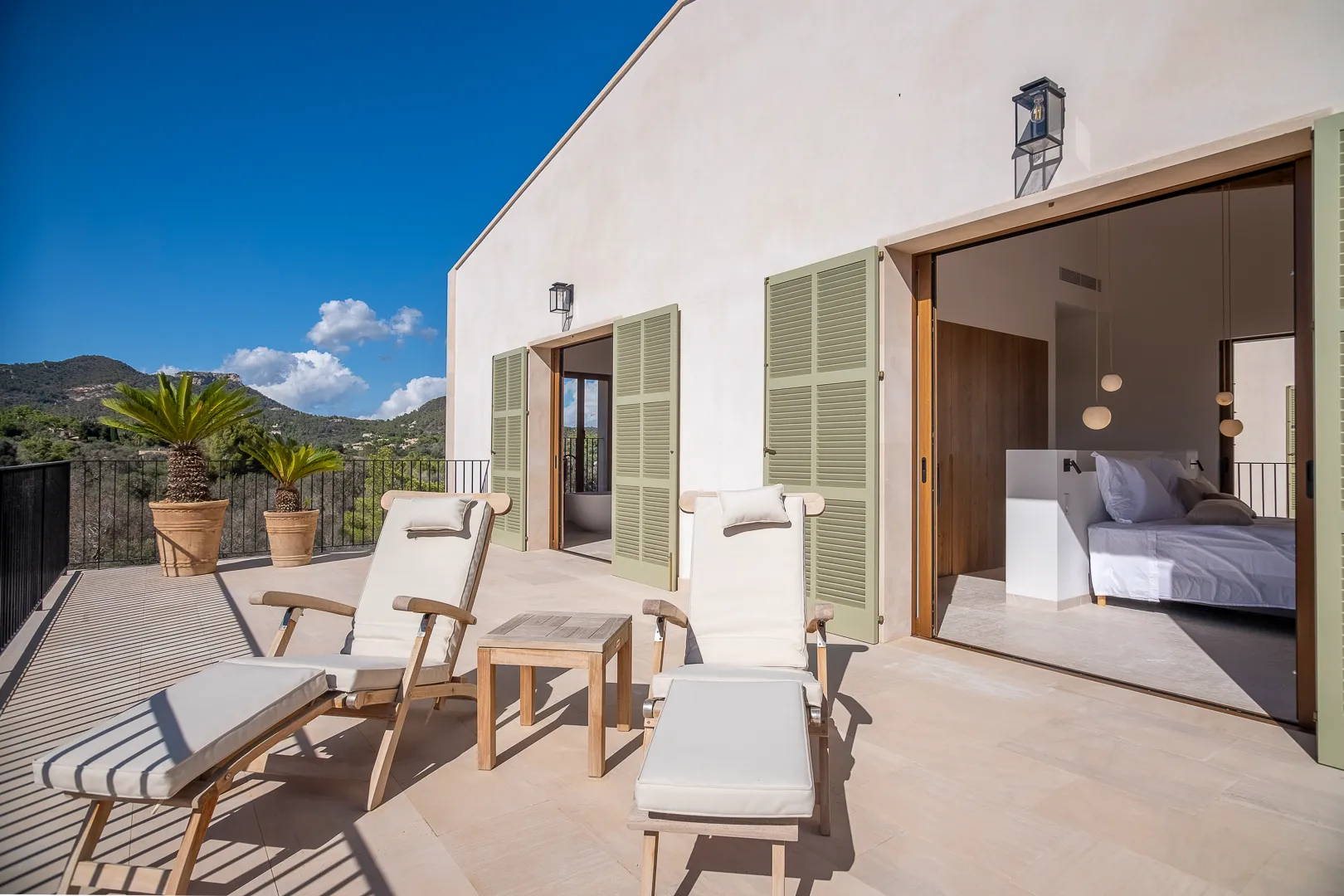
The West and the North appeal to buyers who prioritize setting and daily quality of life over pure convenience. Both regions tend to hold value well because their most desirable property types are scarce: in the West due to protection and topography, and in the North due to limited prime coastal positions and long-term owner hold patterns.
The West Coast (Sóller, Deià, Valldemossa)
The Sierra de Tramuntana is a UNESCO-protected landscape, and that protection materially shapes the property market. New-build opportunities are limited, inventory turnover is often low, and a large share of the most desirable homes are either historic village properties or carefully renovated fincas. This supply constraint is a key reason the West maintains premium pricing even when the market elsewhere becomes more price-sensitive.
What typically commands the highest premiums in the West:
- Irreplaceable location within the UNESCO setting: views, elevation, and proximity to the iconic villages.
- High-quality renovations: especially projects that preserve stonework, proportions, and architectural integrity while upgrading comfort.
- Low-compromise usability: parking, access, and practical layouts can matter as much as aesthetics, because many homes were not designed for modern living.
Engel & Völkers’ 2024 asking-price ranges illustrate a market where prime property is expensive, but the spread is driven heavily by condition and exact village:
- Houses: top locations over €3.2M, with good locations shown at around €1.36M in the published ranges.
- Apartments: top locations shown at around €650k, with mid tiers commonly lower depending on village and finish.
Because replacement supply is structurally constrained, pricing in the West is often less correlated with short-term noise and more tied to the availability of specific, high-quality assets.
The North (Pollensa, Alcudia)
The North of Mallorca is a consistent draw for Northern European buyers who want an outdoor-oriented lifestyle and a calmer pace. It combines beaches, access to the mountains, and a property mix that can work well for families and longer stays: fincas inland, villas near the coast, and apartments in or near established towns and ports.
Core demand drivers in the North:
- Space and privacy: larger plots and homes are more common than in Palma, making it easier to host family and guests.
- Coastal access with a less urban feel: many buyers want beach proximity without a city setting.
- Outdoor rhythm: cycling, hiking, and water sports are part of the region’s day-to-day appeal, not just a holiday layer.
Pricing in the North has one of the island’s widest premium spreads, because top coastal positions can trade at a different level than inland homes. Engel & Völkers’ 2024 asking-price ranges show:
- Houses: very good locations typically €3.25M to €4.7M, with top locations over €10M.
- Apartments: very good locations typically €400k to €485k, with top locations over €550k.
For value retention, the North generally rewards properties that match the area’s real usage patterns: practical layouts, strong outdoor living space, and a location that remains enjoyable beyond peak season.
Central & Southeast: Authentic Fincas and Emerging Luxury
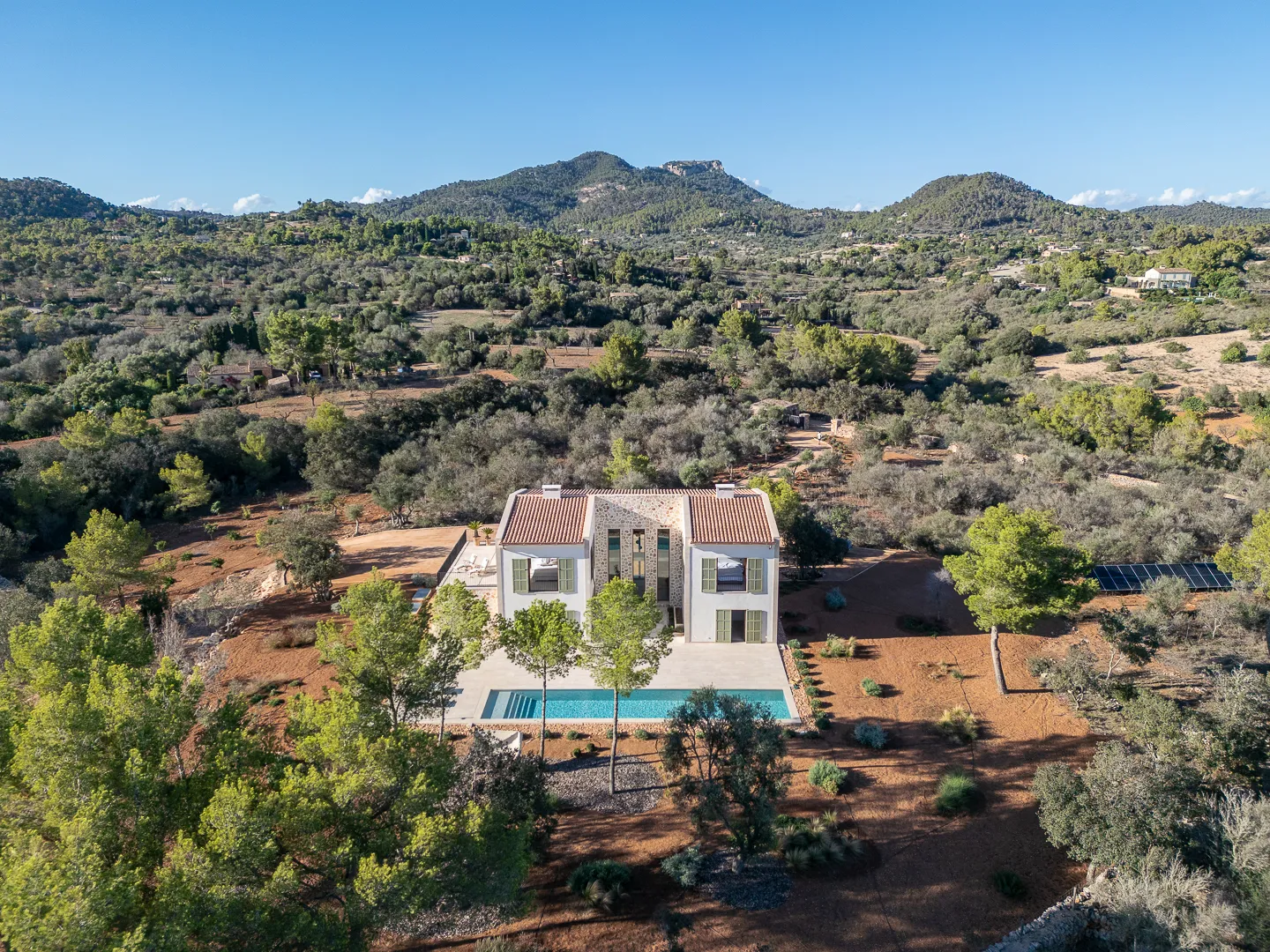
Central Mallorca and the Southeast often attract buyers who want a quieter version of the Mallorca lifestyle without compromising on quality or long-term value. In both regions, pricing is driven less by status addresses and more by property fundamentals: land, privacy, architectural character, and how turnkey the home is for international ownership.
Central Mallorca (Santa Maria, Alaró)
Central Mallorca has become a strong choice for year-round living, particularly for buyers who want countryside space while keeping Palma within easy reach. Demand is typically concentrated around renovated stone fincas, high-quality townhouses in village cores, and new-build country houses that deliver modern comfort without losing local character.
Why the center has strengthened in the €1M+ market:
- Lifestyle fit for longer stays: more space, less seasonal density, and a routine that feels local rather than resort-based.
- Practical proximity to Palma: the ability to access the city’s services while living in a village setting supports both usability and resale liquidity.
- Scarcity of truly well-executed renovations: buyers often pay a premium for finished homes because managing a refurbishment from abroad can add time, risk, and coordination complexity.
Engel & Völkers’ 2024 asking-price ranges in Central Mallorca reflect a premium market that can move quickly for the right product:
- Houses: good locations are shown in the €2.5M to €3.5M range, very good locations €3.5M to €4.5M, with top locations over €4.5M.
- Apartments: published ranges sit lower, with top locations over €400k and very good locations €350k to €400k (though prime village houses and fincas are the center’s main premium segment).
If you are comparing similar price points between central villages and coastal areas, the center often buys you more land, more privacy, and a more stable year-round pattern. The trade-off is usually beach proximity, and in some cases, longer driving times for waterfront dining and marinas.
A practical ownership note: traditional fincas can carry refurbishment and maintenance complexity, and rising materials and energy costs can increase both renovation budgets and ongoing upkeep. For international buyers, a conservative contingency and a clear scope before closing reduces surprises later.
The Southeast (Santanyí, Portocolom)
The Southeast has developed a distinct premium identity around aesthetic village life and a coastline of coves and small harbors. It is often chosen by buyers who want authenticity and calm, but still expect high finish standards, outdoor living space, and a home that performs well as a second residence.
Hotspots such as Santanyí have strengthened demand for design-led properties, including renovated townhouses and villas close to the coast. Marinas and harbors in the broader area add an additional lifestyle pull, especially for buyers who want boating access without the density of the Southwest.
Engel & Völkers’ 2024 asking-price ranges show the Southeast holding firmly in the €1M+ bracket for strong assets:
- Houses: very good locations typically €1.55M to €1.9M, with top locations over €2.2M.
- Apartments: very good locations typically €400k to €500k, with top locations over €450k.
What makes the Southeast feel different from the Southwest is not lower ambition, it is a different pace. The best homes still trade at premium levels, but the appeal tends to be quieter: village routines, coves, and a more understated coastal character. For long-term buyers focused on lifestyle and capital preservation, that combination can be a strong fit when the property is well-appointed, legally clean, and operationally straightforward.
Navigating the Market: A Structured Approach for International Buyers
Buying in Mallorca is rarely just about finding the right home. For most international buyers, the real work is reducing execution risk: sourcing well, verifying legal and technical reality, then running the asset smoothly after completion.
1 Strategy & sourcing
Define your non-negotiables (area, access, usage plan, and risk tolerance), then source accordingly. In the premium segment, this often includes off-market opportunities and properties that never reach the large portals.
2 Due diligence & legal
Verify title, planning status, building legality, and any community obligations before you commit. Align the structure with your tax and residency context, and build contingency for valuation or lender changes if financing is involved.
3 Design & renovation
Translate the property into a reliable, low-friction home: scope, budgets, permits, contractors, and timelines. A single accountable lead reduces the risk of fragmented execution and surprises that appear mid-project.
4 Long-term management
Plan for ownership operations from day one: maintenance, compliance, utilities, security, and (if relevant) a rental strategy that is professionally managed and aligned with local rules and seasonality.
Conclusion & Next Steps
Mallorca remains a stable premium market, especially in the areas where supply is structurally limited and demand is consistently international. While conditions have normalized from the post-pandemic surge, prime assets in the right micro-locations continue to trade on fundamentals: scarcity, usability, and long-term desirability.
Before you narrow in on a specific area, define the ownership plan the property needs to support. A clear brief usually leads to better outcomes than starting with a map pin, because it forces the right trade-offs early: year-round living versus seasonal use, school and infrastructure needs, renovation tolerance, and how much operational support you want after purchase.
If you would like a tailored view of the market based on your budget, timeline, and lifestyle priorities, a trusted local advisor can help you compare regions objectively and avoid costly surprises. Reiderstad Invest supports clients from sourcing and due diligence through design execution and long-term property management, so the purchase works not only on closing day, but throughout ownership.
Take a deep dive into Mallorca’s property market forecast ⇒
Frequently Asked Questions
Are Mallorca property prices falling?
In the premium segment, Mallorca prices are better described as stabilizing than falling. Transaction activity has cooled from peak levels, but limited supply in prime areas and steady international demand continue to support pricing.
What is the average property price in Mallorca?
There is no single meaningful island-wide average for premium buyers because prices vary sharply by region, micro-location, and property type. In prime areas, Engel & Völkers’ 2024 asking-price ranges show houses commonly trading from the low millions upward, while prime apartments typically start in the high six figures and move into seven figures in top locations.
Where is the most expensive area to buy in Mallorca?
Son Vida and the Southwest are consistently among the most expensive areas, with Son Vida standing out for golf-estate homes and top-tier pricing. Prime parts of Palma also command high premiums, particularly for renovated historic properties and sea-view apartments.
What is the property market outlook for 2026?
The 2026 outlook for the premium market is broadly stable, with pricing most resilient where supply is constrained and properties are truly turnkey. Demand is expected to remain led by lifestyle-driven international buyers focused on long-term ownership rather than short-term speculation.