
Introduction
For many international buyers, living in Palma’s Old Town (Casco Antiguo) is appealing for a simple reason: it combines a highly walkable city lifestyle with historic architecture, culture, and year-round practicality, all in one of Mallorca’s most established neighborhoods.
That appeal also comes with real buyer questions: building condition, renovation scope, noise, access and parking, rental rules, and what ownership looks like in a dense, protected urban fabric. This guide is designed to replace guesswork with clear decision-making criteria.
Reiderstad Invest approaches Old Town purchases with a structured, long-term lens: helping you evaluate the property as an asset, the building as a technical reality, and the lifestyle fit as something you can rely on, not just admire during a viewing.
The Reality of Living in Palma’s Old Town
Living in Palma’s Old Town is a walk-first, culture-rich, year-round city lifestyle inside a dense historic neighborhood, it suits buyers who value daily convenience and architectural character over space and car access. As an investment, it is typically considered more defensive than peripheral areas because demand is persistent for prime, finite central stock, but outcomes depend on building condition, renovation complexity, and how well the home fits your intended use (full-time, second home, or rental strategy).
Palma Old Town Property Prices
Palma’s Old Town is considered a top location in the city market, with pricing shaped by architectural scarcity, protected historic stock, and consistent demand from international buyers.
| Property type | Palma Old Town pricing 2024 | Palma Old Town pricing 2025 | Trend |
| Apartments | > €1,100,000 | > €1,100,000 | → |
| Houses/townhouses | > €5,200,000 | > €5,500,000 | ↗ |
Buyer takeaway:
For apartments, pricing at the top end remained stable between 2024 and 2025. For houses and townhouses, values continued to rise, underlining how limited larger-format historic homes are in Palma’s Old Town.
Daily Life & Cultural Rhythms
Palma’s Casco Antiguo tends to reward a slower, more intentional routine: errands happen on foot, daily choices are shaped by what is open nearby, and the neighborhood feels active in every season, not only during peak summer weeks. The tradeoff is density: sound carries in older buildings and narrow streets, and neighbor dynamics matter more than they do in stand-alone homes.
Morning Coffee & Market Rituals
Mornings typically start with a short walk across cobblestone streets to a nearby cafe, bakery, or specialty shop, then continue with practical errands done in compact loops rather than car-based trips. This is one of the main lifestyle advantages for buyers who want a second home that works without planning.
A common routine is building the day around fresh food shopping at Mercat de l’Olivar, then returning home with minimal logistics: you are close enough that you can buy what you will actually use, rather than stocking up. For households that spend part of the year in Mallorca, this cadence often makes the apartment feel livable quickly, even with limited storage.
What to plan for in the morning rhythm:
- Walkability first: choose a micro-location where your daily needs (coffee, groceries, pharmacy, gym) are genuinely reachable on foot.
- Building acoustics: older stairwells, interior patios, and high ceilings can amplify sound; evaluate windows, shutters, and general insulation during viewings.
- Neighbor proximity: in dense buildings, respectful management and house rules materially affect quality of life, especially during move-ins, renovations, and holiday periods.
Art, Culture, & Gastronomy
Old Town culture is not an occasional treat; it is embedded in the weekly routine. You can step into galleries, exhibitions, and seasonal programming without committing to a full-day trip, which is part of what keeps the area feeling sophisticated year-round.
For contemporary art, Es Baluard is a practical anchor because it is close enough to visit casually, not only when hosting guests. Gastronomy follows the same pattern: rather than chasing volume or novelty, the neighborhood supports a consistent rotation of places that work for a quick lunch, a late dinner, or a quiet drink, often within a short walk home.
Premium amenities also show up in subtle ways: boutique hotels such as Nobis Hotel Palma function as extensions of the neighborhood, useful for meeting friends, having a reliable bar or restaurant, or booking spa and wellness experiences without leaving central Palma. Nearby, the Paseo Maritimo redevelopment is improving the pedestrian experience toward the waterfront, expanding the walkable radius for evening routes and weekend routines. Not to mention the lively hot spot Santa Canatlina.
Discover what it’s like living in Santa Catalina vs Palma’s Old Town ⇒
Real Estate Types and Pricing Expectations
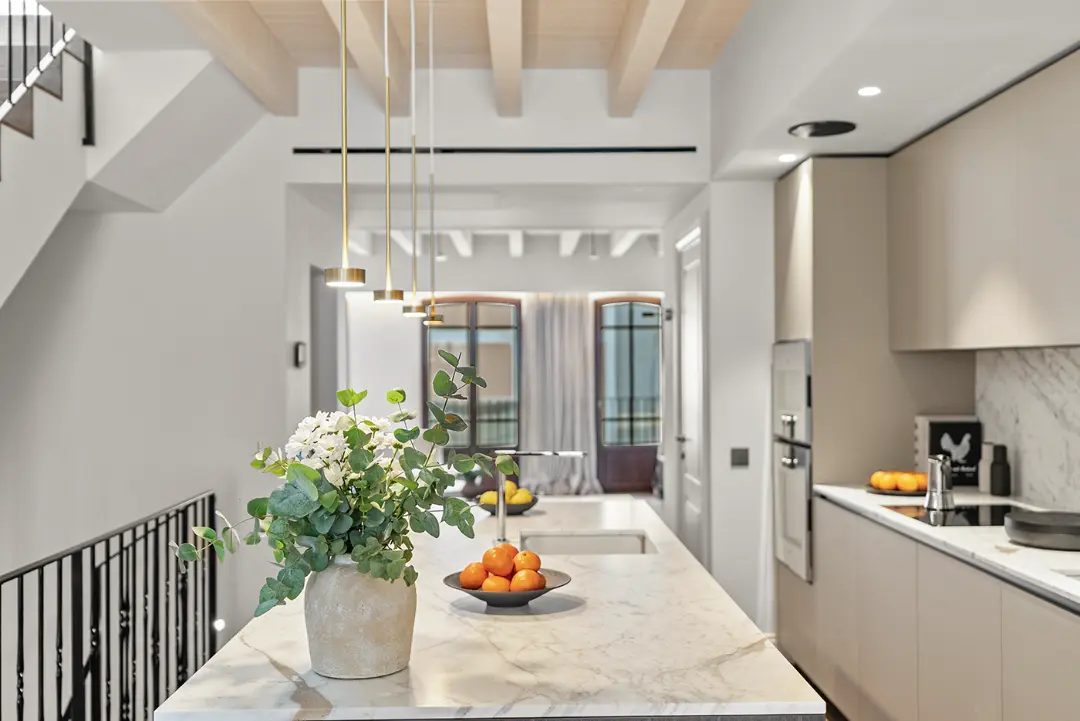
As a baseline expectation for top-location apartments in Palma’s Old Town, entry pricing commonly starts above €1.1M, with 2025 asking prices for apartments in top locations remaining at more than €1.1M, broadly in line with 2024 levels. Beyond price, the real differentiator is execution quality: building condition, legal and community constraints, and the depth of renovation work already completed.
For buyers considering larger historic assets, the pricing gap is substantial. In Palma’s top locations, houses and townhouses averaged above €5.5M in 2025, up from more than €5.2M in 2024. That spread helps explain why fully renovated apartments and penthouses often attract a broader buyer pool, while historic houses appeal to a narrower segment willing to take on more complexity in exchange for scale, privacy, and architectural character.
Palma’s Old Town is a constrained market: heritage protections and a limited supply of truly prime addresses mean inventory stays tight, and quality differences are priced in quickly. For buyers, the practical implication is that turnkey, well-executed renovations command a premium, while unmodernized homes can look attractive on paper but require higher risk tolerance and stronger project oversight.
Historic Townhouses & Palaces
Old Town townhouses and larger historic residences appeal to buyers who want privacy, vertical living, and architectural presence, often with features that are difficult to replicate in new builds, such as original stonework, courtyards, detailed carpentry, or formal staircases. They can also be the most operationally demanding assets to own.
In practice, these properties often involve:
- Heritage constraints: protected elements can limit what you can change, how you can change it, and the approvals needed.
- Technical complexity: older structures may hide issues that only surface during deeper inspection or renovation planning, such as moisture, outdated systems, uneven floors, or roof condition.
- Ongoing capex mindset: even after a renovation, older buildings usually require more proactive maintenance planning than modern developments.
For this property type, an integrated advisory partner matters because the decision is rarely just about acquiring the keys. You are also committing to technical due diligence, design decisions, contractor management, and long-term maintenance systems that need to work reliably when you are not in Mallorca.
Renovated Luxury Penthouses
Renovated penthouses in Old Town are typically the most straightforward fit for international buyers who want a high-comfort base with minimal friction. The value proposition is simple: prime location, high-quality interior finish, and an ownership experience that is closer to modern expectations, with efficient layouts, updated mechanicals, better insulation, and contemporary kitchens and bathrooms.
These homes are highly desirable because they compress the risk curve:
- If the renovation is genuinely thorough, you avoid the most common surprises associated with historic buildings.
- The timeline to usability is short, which matters for second-home owners or buyers who want immediate lifestyle access.
This is why the market heavily rewards fully renovated homes in central Palma. With top-location apartment pricing holding above €1.1M, buyers are clearly willing to pay for centrality and execution certainty. When a penthouse renovation is design-led and technically robust, it tends to attract decisive demand and premium pricing relative to similar-sized units needing work.
For buyers considering non-turnkey options, the key is to treat the renovation as part of the acquisition strategy from day one, not as an afterthought. Reiderstad Invest’s model is built around that reality, combining acquisition support with project management and Scandinavian-aligned design, so the property can be evaluated, upgraded, and operated as one coherent plan rather than a fragmented set of handovers.
Where to Buy: An Old Town Neighborhood Guide
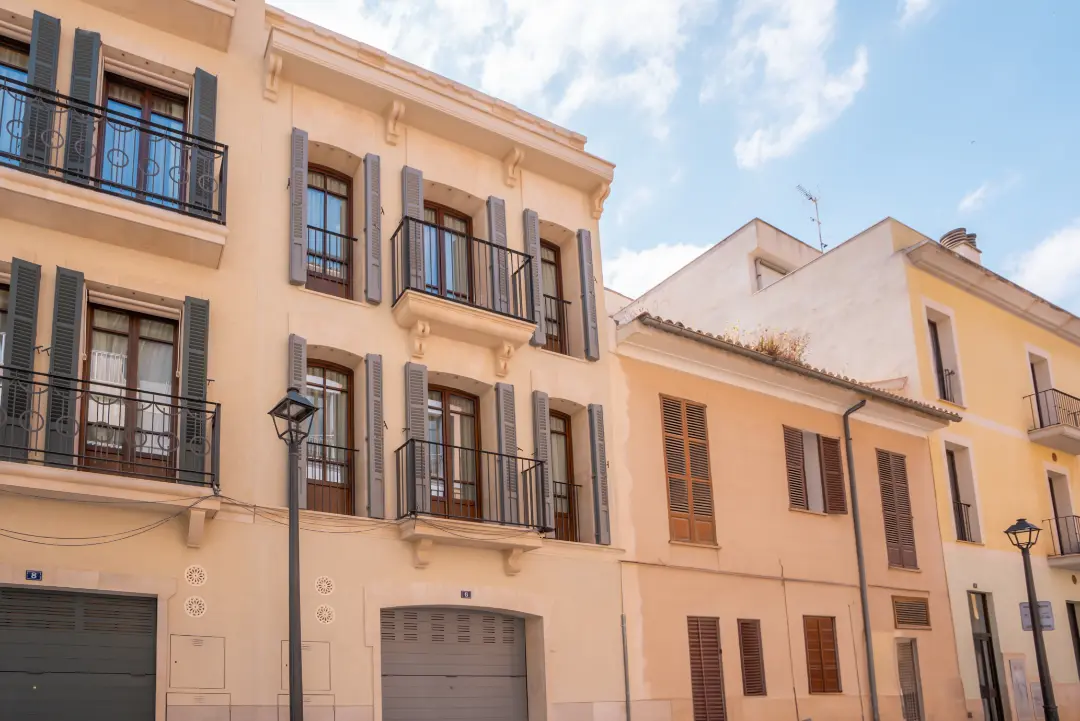
In Palma’s Old Town, the right purchase decision is often less about the apartment itself and more about the micro-location: evening noise, foot traffic, owner-occupancy, and building culture can vary street by street. Use the framework below to match each area to your daily routine and your tolerance for vibrancy versus discretion.
| Area | Day-to-day vibe | Architecture and housing stock | Best fit buyer profile | Watch-outs to validate |
| La Lonja | Lively, social, dining-forward, higher evening energy | A mix of historic apartments and refurbished buildings near restaurant streets | Buyers who want to step out into nightlife, enjoy hosting, and prefer convenience over quiet | Noise at night, higher foot traffic, building entry privacy, and short-stay activity patterns |
| Santa Eulàlia | Polished, design and shopping oriented, central without constant nightlife | Elegant apartments in classic buildings, strong premium retail, and hospitality nearby | Buyers who want a refined city base, like being central, and value a curated, affluent atmosphere | Street-level bustle, deliveries, sound insulation, and building management quality |
| Calatrava | Quieter, more residential, slower pace | More preserved historic fabric, including notable palatial elements and quieter streets | Buyers prioritizing discretion, families, and a predictable daily life with less evening noise | Access logistics (car drop-off, parking), sunlight orientation in narrow streets, and renovation constraints |
A practical rule for risk reduction: if peace and discretion are priorities, favor blocks with higher owner-occupancy and stable residents over buildings with frequent turnover. In dense historic cores, neighbor behavior and building management can be as important as finishes.
La Lonja: Lively & Central
La Lonja is the most extroverted choice: it is built around Palma’s restaurant and bar scene, with a strong sense of movement from afternoon into late evening. The payoff is immediacy; you can live a fully urban routine without planning, and hosting friends is effortless because Palma comes to your doorstep.
This micro-area tends to suit buyers who:
- Enjoy dining out regularly and do not require early-night quiet
- Want a second home that feels animated year-round
- Accept that street presence and sound levels are part of the package
Due diligence is more lifestyle-specific here: view at different times, check window quality, and verify how the building handles access, noise complaints, and general house rules.
Santa Eulàlia: Avant-Garde & Affluent
Santa Eulàlia feels more curated than La Lonja: still central, but typically oriented around premium shopping, boutique hospitality, and a quieter form of city energy. It is a strong fit for buyers who want to walk everywhere but prefer a more composed baseline day to day.
The area often appeals to:
- Executives and international buyers seeking a secure, structured second home
- Owners who want a refined address and high-quality surroundings
- Buyers who care about design, interiors, and a clean aesthetic
Because it is central, the work is in the details: confirm interior quiet, assess how street-level activity affects privacy, and look closely at the building’s maintenance standard and governance.
Calatrava: Quiet & Residential
Calatrava is the calm counterpoint: more residential, typically less nightlife-driven, and often perceived as one of the better fits for discretion and family routines. The architecture can feel especially preserved, with a higher likelihood of historically significant elements and a more sheltered street atmosphere.
This area is usually optimal for buyers who:
- Want a primary residence feel inside the city
- Prioritize quieter evenings, stability, and predictable neighbor behavior
- Accept the practical realities of an older urban fabric (access, light, constraints)
Here, the main validation points are operational: confirm day-to-day access (taxis, loading, parking strategy), check natural light and orientation, and be clear on what is possible under heritage and community rules if you plan to update the home.
Practical Considerations for International Buyers
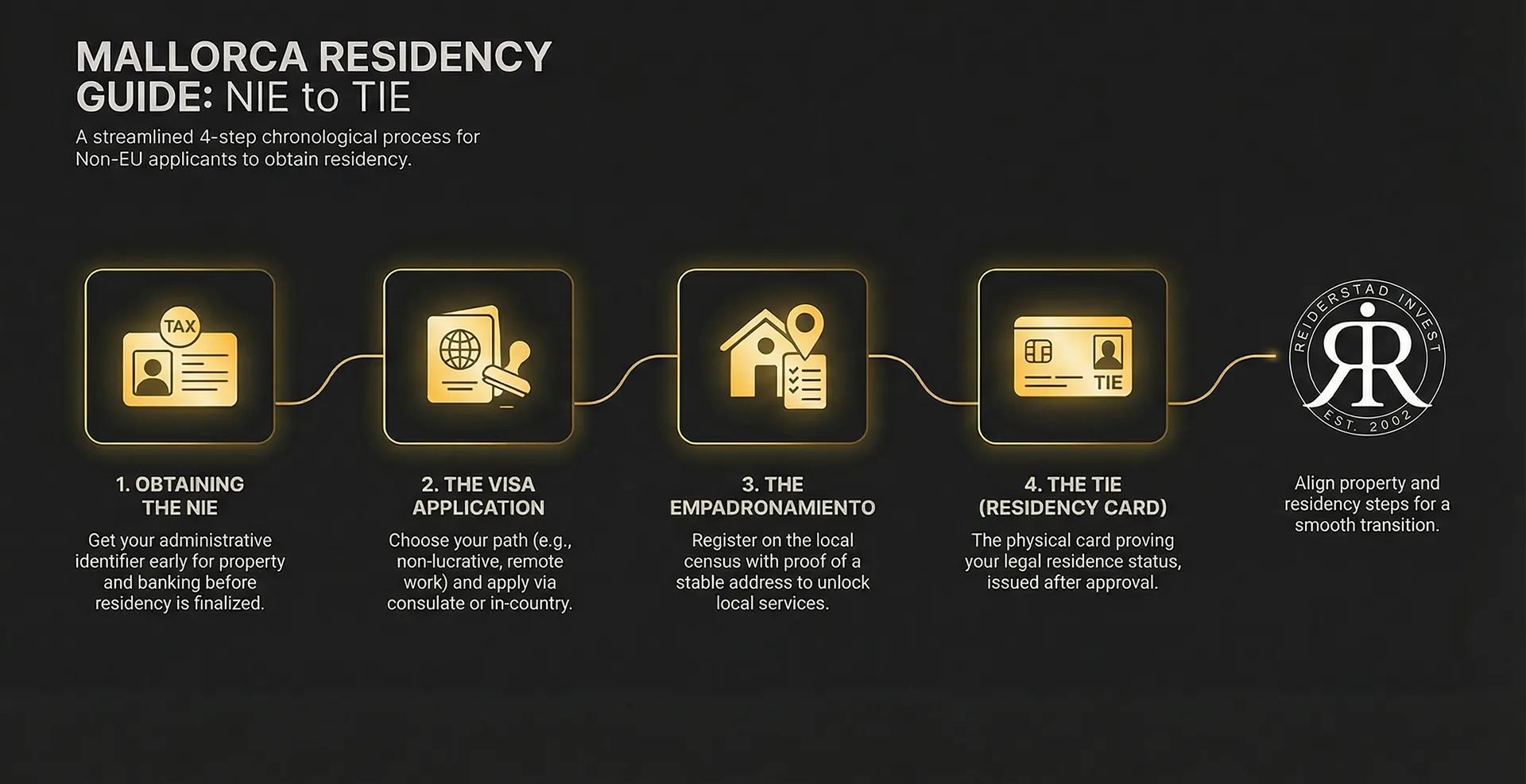
Buying in Palma’s Old Town is rarely complex because of the viewing; it is complex because of governance: heritage constraints, multi-owner buildings, and the fact that many owners are not resident year-round. International buyers reduce risk by treating administration, legal structure, and operations as part of the acquisition plan from the start.
Explore how to get residency seamlessly in Mallorca ⇒
Visas & Residency Paths
Your residency path affects timelines, tax planning, and practical setup (banking, utilities, healthcare, schooling). Two commonly referenced options for buyers moving to Spain include the Digital Nomad Visa and the Non-Lucrative Visa, but eligibility depends on personal circumstances and should be validated with qualified professionals before you commit to a purchase timeline.
Operationally, plan for:
- Aligning property search timing with visa and relocation lead times
- Preparing documentation early so the purchase does not become the bottleneck
- Investing in language skills, learning Spanish is not required to buy, but it improves day-to-day integration and reduces dependence on intermediaries
Legal, Tax, & Property Management
Old Town purchases benefit from early, coordinated legal and tax advice because the asset is often governed by layers of rules: the property deed, the building community (where applicable), and heritage or planning restrictions that can affect renovation scope and even ongoing maintenance decisions.
Key items to put in motion early:
- Local legal counsel: confirm title, easements, building community obligations, and any limitations that matter to your intended use (full-time living, second home, or rental strategy).
- Tax planning: structure ownership and reporting in a way that matches your residency status and long-term plan; do not treat taxes as a post-closing task.
- Renovation and heritage due diligence: if you may renovate, validate what is permitted before you buy, not after, because constraints can materially change feasibility, timeline, and cost.
If you will be an absentee owner, professional property management is not a luxury, it is a control system. In dense multi-unit buildings, responsive management is also one of the most practical defenses against friction: it helps enforce house rules, coordinate maintenance, and respond quickly if nuisance issues arise. Reiderstad Invest’s end-to-end model is built for this reality, reducing fragmented handovers between acquisition, project execution, rental strategy, and ongoing ownership.
Parking & Day-to-Day Logistics
Old Town living is optimized for walking, not cars. Many streets are narrow, access can be restricted, and parking is often the deciding factor in whether a property feels effortless or persistently inconvenient.
Before you buy, validate the logistics that will shape daily life:
- How you will handle arrivals and departures (taxis, transfers, luggage, deliveries)
- Whether the building has practical access for moving furniture and renovation materials
- Your realistic parking plan, including whether the property includes parking, has nearby options, or requires a long walk
- Waste disposal, elevator availability, and stair access (especially relevant for families, older owners, and long stays)
A final practical consideration is governance and neighbor predictability: in high-density historic buildings, community management quality and resident stability can directly affect your experience. As part of due diligence, it is reasonable to ask what you can verify about building management, outstanding disputes, and the general pattern of owner-occupancy versus high turnover.
The Market Pulse: Why Invest in Palma Now?
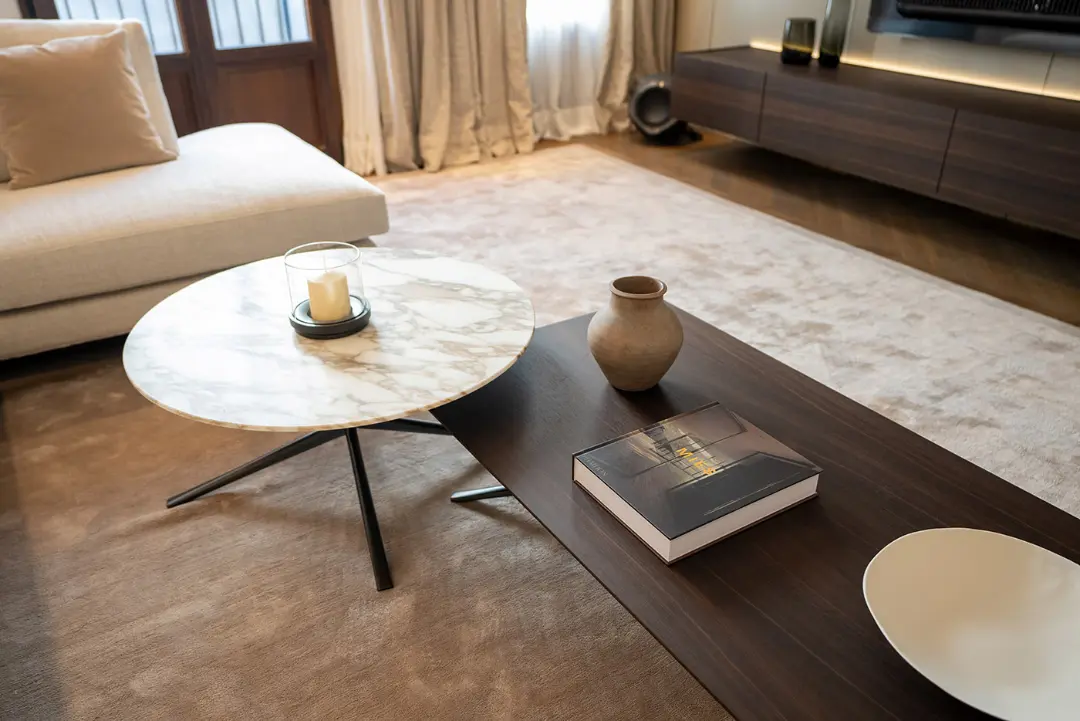
Palma’s Old Town tends to attract capital for structural reasons more than cyclical hype: supply is naturally limited, replacement is difficult due to preservation rules, and demand is supported by buyers who want a functional, year-round base in a European city rather than a purely seasonal retreat.
Several factors commonly underpin the investment case:
- Constrained supply in prime areas: heritage protection and the physical reality of a built-out historic center limit new inventory and keep competition focused on a finite set of high-quality homes.
- Quality is increasingly priced in: buyers pay for execution certainty, which is why turnkey, well-renovated properties typically command a premium over comparable homes that still carry technical and permitting risk.
- Shift toward year-round living: Palma is increasingly used as a permanent or semi-permanent base by international executives and families, which supports more consistent demand patterns than purely holiday-driven markets.
- City investment supports long-term appeal: projects such as the Club de Mar upgrade and the Paseo Maritimo revitalization strengthen Palma’s waterfront and pedestrian experience, widening the practical lifestyle radius from Old Town.
It is still important to separate the neighborhood thesis from the individual asset. Old Town can be resilient at a macro level, but performance at the property level depends on building quality, community governance, and renovation integrity. This is where a structured approach matters: combining acquisition criteria with technical due diligence and a clear plan for long-term management, so the investment is defensible not only today but through the ownership lifecycle.
While Palma is often described as stable and less speculative in character, it should not be treated as immune to broader cycles. A conservative buyer mindset focuses on buying well-located, well-executed assets that remain liquid within the premium segment, even if sentiment shifts.
Read about living in Santa Cata
Your Next Chapter in Mallorca
Palma’s Old Town is at its best when your priorities are clear: a walkable daily routine, year-round culture, and a prime, supply-constrained address that rewards quality and long-term thinking. The strongest outcomes typically come from matching the right micro-neighborhood to your lifestyle, choosing a property type that fits your risk tolerance (turnkey versus renovation), and validating building realities early, especially in protected historic stock.
For international buyers, the practical advantage is working with one accountable partner across the full ownership lifecycle: acquisition strategy, technical due diligence, design and renovation execution, rental planning where relevant, and ongoing property management when you are not on the island. This structure reduces fragmented handovers and helps ensure the home works as intended after closing, not just on viewing day.
If you would like a structured conversation about buying in Casco Antiguo, you can contact Reiderstad Invest to discuss your criteria and timeline, or explore suitable Old Town properties with an advisory-led approach.
Schedule a call with Reiderstad Invest now ⇒
Frequently Asked Questions
Do I need to speak Spanish to live in Palma’s Old Town?
No, you can live comfortably in Palma’s Old Town without speaking Spanish, especially in day-to-day interactions in central Palma, where English is common in many service settings.
That said, learning Spanish is highly recommended if you plan to spend significant time on the island or own a property long-term. It makes practical tasks easier (building communications, maintenance coordination, administration) and helps you integrate more naturally with local life.
Are cars allowed in the Casco Antiguo?
Cars can be used in and around the Old Town, but access is not as straightforward as in newer parts of Palma. Narrow streets, limited parking, and access constraints on certain streets mean that driving is often the least efficient way to move within the neighborhood.
For most owners, the realistic approach is to plan for walking as the default and treat car use as occasional, supported by a clear parking and drop-off strategy.
Is Palma’s Old Town a good real estate investment?
It can be a strong long-term investment because prime Old Town supply is naturally limited and demand tends to be consistent among international buyers seeking a central, year-round base. Turnkey, well-renovated properties often attract the most durable demand because they reduce technical and operational uncertainty.
However, results depend heavily on the individual asset and building: renovation quality, governance in multi-owner buildings, and any heritage constraints that affect future works or maintenance. For buyers planning a renovation or a long-term hold, structured due diligence and a clear management plan are typically what protect value.
Is Palma Old Town worth visiting?
Yes. Palma’s Old Town is one of the city’s most established areas, known for its historic architecture, walkable streets, culture, and year-round atmosphere.
Is Palma Cathedral in the Old Town?
Palma Cathedral sits at the edge of the historic centre and is closely connected to the Old Town area.